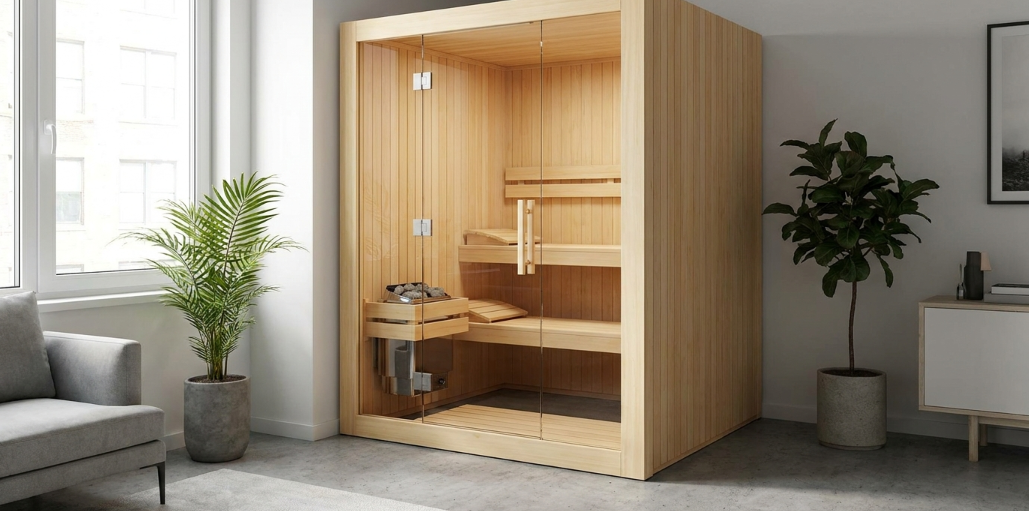

An electric heater fits a small sauna best when the property already has power nearby and the owner wants a fast, low-effort routine: set a temperature, wait 20 to 40 minutes, done. A wood-burning heater fits best on rural or off-grid properties, or for owners who specifically want the ritual of building a fire, but it needs 15 to 20 inches of clearance from combustible walls versus roughly 3 to 4 inches for electric, plus a permitted chimney, both of which matter more in a compact two or three person cabin than in a larger one.
Which Fits a Suburban Backyard With Existing Power?
For a typical suburban lot with an existing electrical panel and reasonable proximity to the yard, electric is the more practical choice by a wide margin. A small electric heater sized around 4.5 to 6 kW for a two or three person cabin runs on a dedicated 220 to 240V circuit, heats predictably, and needs no fuel storage, no chimney permit, and no ash cleanup. The tradeoff is the electrician cost for the dedicated circuit, typically $200 to $600, but that is usually a smaller hurdle than adding a code-compliant chimney penetration to a small backyard structure. Once installed, an electric heater also requires almost no attention during a session beyond setting the thermostat, which fits well with how most suburban households actually use a home sauna, as a quick reset squeezed between work and the rest of the evening rather than a planned block of time built around tending a fire.
Which Fits a Rural or Off-Grid Property?
On a property without convenient grid power, or where running a new circuit to a remote sauna location would be expensive, a wood-burning heater removes the electrical dependency entirely. Many rural sauna owners already have access to firewood, which changes the cost equation in wood’s favor, and the heater itself, once installed, needs nothing but fuel and a match to run. The chimney and clearance requirements still apply regardless of how remote the property is, so the footprint savings of a small cabin get partly eaten up by the extra clearance a wood heater demands around it. Fuel storage is the other practical factor rural owners tend to underestimate at first: a season’s worth of dry, split wood needs a covered, ventilated spot somewhere near the cabin, which adds its own small footprint requirement on top of the sauna itself, something an all-electric setup never has to account for.
Which Fits a Small Cabin’s Limited Bench Space?
Clearance requirements matter disproportionately in a compact footprint. A wood-burning heater’s 15 to 20 inch clearance from combustible surfaces can claim a meaningful chunk of a 4×4 or 5×6 foot cabin’s usable floor and bench area, while an electric heater’s tighter 3 to 4 inch clearance leaves more of that same small footprint free for seating. For anyone building the smallest possible sauna, a corner unit sized for one or two people, this difference alone often settles the decision in favor of electric simply on space grounds.
Which Fits an Owner Who Wants the Fire-Tending Ritual?
Some sauna owners specifically want the process of splitting kindling, building a fire, and tending it as part of the experience, and no electric heater replicates that. A wood-burning small sauna delivers a different, slower kind of session: 45 minutes to an hour to build proper heat compared with 20 to 40 minutes for electric, plus the ongoing task of keeping the fire fed during a longer session. For an owner treating sauna time as a deliberate slow-down from a busy week, that extra effort is part of the appeal rather than a downside. It also changes the sensory experience somewhat, since a wood fire produces a faint smoke smell and a slightly less even heat distribution than an electric element, characteristics that wood-heat owners often describe as part of the authenticity rather than a flaw to engineer away.
Which Fits a Tight Budget, Upfront and Over Time?
Upfront, a wood-burning heater for a small cabin is often comparable in price to an electric one, sometimes a bit less for the heater itself, but the chimney kit and installation labor typically add more to the total project cost than an electrician’s dedicated circuit would for electric. Ongoing cost depends heavily on fuel access: electric runs on predictable utility rates, while wood can be nearly free with a personal supply or more expensive than electric per session if firewood has to be purchased by the bundle or cord. Owners comparing both heater types on an actual small cabin, rather than as an abstract choice, can look at current model configurations from SweatDecks and other specialty sauna retailers to see how heater type affects total unit pricing before deciding.
Which Heat Source Matches the Cardiovascular Research?
The cohort research behind most sauna health associations does not distinguish between electric and wood heat sources, since both, done correctly, produce a comparable hot-air sauna environment in the 170 to 190 degree Fahrenheit range the studies describe. A 2018 review in Mayo Clinic Proceedings and a 2018 systematic review in Evidence-Based Complementary and Alternative Medicine both summarized cardiovascular associations tied to sauna bathing frequency broadly, not to any particular heater technology. A 2023 follow-up review, also in Mayo Clinic Proceedings, reinforced that consistency of use across a range of sauna types is the variable most tied to the associations reported, which means the electric-versus-wood decision can be made on practical grounds, power access, budget, clearance, and personal preference, without worrying that one option undercuts the health case for owning a sauna at all. What matters far more for actually seeing any of the associations described in that research is showing up consistently, several times a week over months and years, regardless of whether the heat behind the door came from a breaker panel or a woodpile.
Frequently Asked Questions
Is an electric or wood-burning heater better for a small sauna? Electric suits properties with existing power and owners who want fast sessions. Wood suits rural or off-grid properties and owners who value the fire-building ritual.
How much clearance does a wood-burning sauna heater need? Commonly 15 to 20 inches from combustible walls versus roughly 3 to 4 inches for electric, which affects usable space in a small cabin.
Does a wood-burning small sauna need a permit for the chimney? In most municipalities, yes, since a roof-penetrating chimney typically falls under separate building code requirements.
Which heat source is cheaper to run in a small sauna? Electric is usually cheaper and more predictable in a suburban setting. Wood can be cheaper only with a low-cost or free fuel supply.
References
- Cardiovascular and Other Health Benefits of Sauna Bathing: A Review of the Evidence, Mayo Clinic Proceedings, 2018
- Clinical Effects of Regular Dry Sauna Bathing: A Systematic Review, Evidence-Based Complementary and Alternative Medicine, 2018
- Does the Combination of Finnish Sauna Bathing and Other Lifestyle Factors Confer Additional Health Benefits? A Review of the Evidence, Mayo Clinic Proceedings, 2023
By Brian Castellano